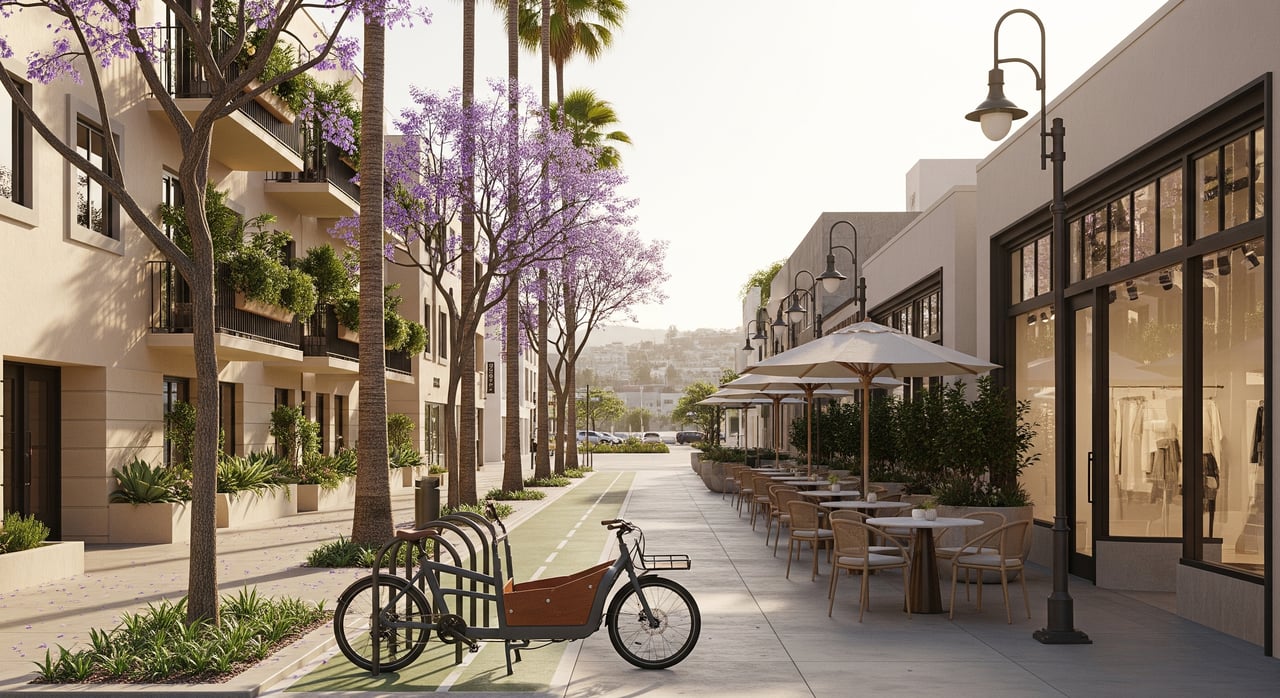
What if your daily routine in West Hollywood fit neatly into a 5 to 20 minute walk? If you want the energy of Central LA without the daily drive, you are in the right place. West Hollywood’s compact scale, busy corridors, and year-round climate make a car-free or car-light lifestyle realistic for many households. In this guide, you will learn what daily life looks like, which blocks work best, and how to plan around transit, biking, deliveries, and the occasional rideshare. Let’s dive in.
Why West Hollywood works car-free
West Hollywood sits between Beverly Hills and Hollywood and covers less than 2 square miles. That small footprint, paired with dense, mixed-use corridors, means you can reach a lot on foot. Santa Monica Boulevard, Sunset Boulevard, Robertson, La Cienega, and Melrose concentrate most shopping, dining, and services.
The pedestrian experience is strong on the main streets, with continuous sidewalks and closely spaced destinations. If you live on or within a block or two of a corridor, you can usually walk to groceries, coffee, fitness, and pharmacies in minutes. Blocks at the eastern and northern edges are still walkable in parts, though daily trips may take longer.
Terrain is mostly flat, with some hillier blocks as you move north toward the ridge near the Sunset Strip. The Southern California climate usually supports walking year-round, but heat waves, poor air quality days, or rain can affect comfort.
Micro-location matters
Choosing the right block is the difference between true car-free and car-light. Focus on addresses within 1 to 2 blocks of one or more main corridors.
Santa Monica Boulevard blocks
- Strong day-to-day convenience for groceries, coffee, gyms, pharmacies, and services.
- Central location that links quickly to other corridors.
- Expect steady foot traffic and active crosswalks.
Sunset Strip vicinity
- Ideal if you enjoy nightlife, entertainment, and restaurants.
- Higher evening activity and traffic. Some blocks are hillier as you go north of Santa Monica Boulevard.
- Residential pockets exist just off the Strip for a quieter feel while staying close.
Robertson, La Cienega, and Melrose area
- Known for shopping, dining, and design showrooms.
- Highly walkable for daily errands, with frequent fitness and wellness options.
- Good for a car-light lifestyle that leans on walking and short rides when needed.
Edges near Fairfax and Hollywood
- Many blocks remain walkable, yet distances to core amenities can increase.
- Plan routes that favor safe crossings and quieter side streets.
What you can do on foot
Daily errands and services
From central corridors, you can typically walk to:
- Supermarkets and specialty markets
- Coffee shops, bakeries, and casual dining
- Pharmacies and basic banking
- Dry cleaners and convenience stores
- Gyms, yoga, and boutique fitness
- Small medical and dental clinics
Schools, daycare, and community centers are located across the city. If that is a priority, map each address to specific destinations before you decide.
Parks and wellness
Residents often walk to West Hollywood Park, Plummer Park, and smaller pocket parks for fresh air, playgrounds, and open space. Wellness providers, salons, and spas are common near the main corridors, which keeps weekly routines simple without a car.
Dining and entertainment
Restaurants and bars line Santa Monica Boulevard, Sunset Boulevard, and Robertson, with many casual and mid-price options that work well for frequent walkable dining. Entertainment venues, comedy clubs, and live music are part of everyday life here. For late nights, many residents walk or use a short rideshare.
Sample daily patterns
- Single professional: 10 to 15 minute walk to morning coffee, 5 to 10 minutes to a grocery store and gym, 10 to 20 minutes to dinner or a show.
- Small family: Daily school drop-off within the city, weekly grocery trips on foot or a short ride, playground time at a nearby park.
- Nightlife-focused: Walk to venues on the Sunset Strip or use rideshare for late returns.
Getting around beyond walking
Bus and local shuttles
Multiple bus routes run along Santa Monica Boulevard, Sunset Boulevard, La Cienega, and Fairfax. These provide frequent east–west and north–south connections within Central LA, especially during the day. Evening and weekend service varies by line, so check schedules before you rely on a specific route.
There are no heavy rail stations inside most of West Hollywood. The nearest rail stops are in adjacent Hollywood and along Wilshire. You can usually reach them by a short bus or bike ride.
Biking and micromobility
Bike lanes exist on several corridors and connect into the broader LA network, though quality varies by block. Shared e-bikes, dockless bikes, and e-scooters are common and useful for 1 to 3 mile trips or first and last mile transit connections.
If you plan to ride often, look for secure bike storage and an easy ground-level route out of your building.
Rideshare, taxis, and carshare
Ride-hailing is widely used for trips beyond walking distance or when transit is inconvenient. Wait times are usually short in high-demand areas. Carshare and short-term rentals are available in the region and work well for bulk errands, out-of-town travel, or one-off appointments.
Late-night tips
Nighttime transit frequency can be limited. Many residents walk short distances home from venues or use rideshare after events. Plan a meeting spot with good curb access for pickups.
Housing that supports car-light living
Building types that work
- Mid-rise condos and apartments on or near Santa Monica Boulevard, Melrose, Robertson, or Sunset for immediate access to retail and services.
- Mixed-use buildings with ground-floor retail and in-building amenities to reduce the need for vehicle trips.
- Small walk-ups and condo conversions in central blocks for close-to-amenities ownership or rental.
Unit and building features to prioritize
- In-unit laundry or secure, on-site laundry
- Ground-floor retail access or a grocery and pharmacy nearby
- Secure long-term bike storage and easy street-level exit
- Package lockers or a staffed mailroom for frequent deliveries
- Visitor parking or dependable curb space for rideshare and deliveries
- Elevator or accessible entry for carrying groceries
Parking and cost tradeoffs
Walkable blocks often command a premium because you are paying for convenience and time savings. Buildings farther from the corridors might include more on-site parking, but they usually require longer walks for errands. Many older or smaller buildings have limited or no assigned parking. That can be a positive for car-free residents, but plan ahead for guest visits or occasional rentals.
Practical tradeoffs and planning
Safety and route choices
West Hollywood invests in pedestrian-friendly design on main corridors. Still, some intersections are busy. Use crosswalks, plan quieter side-street routes when possible, and give yourself extra time at peak hours.
Deliveries and logistics
Car-free living works well with frequent deliveries. Confirm whether your building accepts packages, has secure lockers, and allows grocery delivery to your door or to a concierge. For furniture and bulky items, schedule delivery windows with the building in advance.
Families and schools
If you are planning for school-age children, map the walk to specific schools and daycare centers you intend to use. Many families find stroller-friendly routes workable, though curb cuts and sidewalk width vary by block.
Weather and seasonal limits
Heat waves, poor air quality from wildfires, or heavy rain can limit walking or biking. Keep a backup plan for those days, such as rideshare, shuttles, or remote work when possible.
Budgeting for a car-light life
Car-free households usually save on insurance, parking, fuel, and maintenance. Some of those savings shift to rideshare, delivery fees, and occasional rentals. Factor those costs alongside any premium you pay for a unit closer to the corridors. If your job requires daily travel to areas with limited transit, fully car-free may be less practical. A car-light approach could be the right balance.
Quick address checklist
Use this short list to compare buildings and blocks:
- Walk time to the nearest supermarket, pharmacy, and coffee shop
- Bus lines within a 5 to 10 minute walk, including evening and weekend service
- Proximity to bike lanes and availability of shared e-bikes or scooters
- Sidewalk quality, crosswalk locations, and preferred quiet routes
- In-unit or on-site laundry, secure bike storage, package lockers, elevator access
- Visitor parking options and curb space for rideshare and deliveries
- Building rules for deliveries and move-ins
Is car-free WeHo right for you?
If you want an urban lifestyle in Central LA with minimal driving, West Hollywood makes it achievable. The key is micro-location. Choose a unit within a block or two of the main corridors, prioritize buildings with bike storage and delivery-friendly amenities, and plan for occasional rideshare or car rentals. With those pieces in place, you can cover most of your week on foot and enjoy the best of the city at your doorstep.
When you are ready to identify the blocks and buildings that fit your goals, connect with a local advisor who knows the terrain. For discreet, finance-focused guidance on West Hollywood condos, townhomes, and boutique buildings, reach out to Hannah Laird. Schedule a private consultation and get a plan tailored to your car-light lifestyle.
FAQs
Is West Hollywood walkable for daily errands?
- Yes. If you live on or within a block or two of Santa Monica Boulevard, Sunset Boulevard, Robertson, La Cienega, or Melrose, you can usually walk to groceries, coffee, fitness, and pharmacies in 5 to 20 minutes.
Are there rail stations inside West Hollywood?
- No. There are no heavy rail stations inside most of West Hollywood. Nearby stations in Hollywood and along Wilshire are reachable by bus, bike, or a short rideshare.
Can I rely on buses in West Hollywood?
- Often, yes. Multiple routes run along the main corridors with good daytime frequency. Evening and weekend service varies, so check current schedules before you commit to a line.
What building features help with a car-free lifestyle?
- Look for in-unit or on-site laundry, secure bike storage, package lockers, an elevator, and easy curb access for rideshare and deliveries. Ground-floor retail or a nearby grocery is a plus.
Will I need a car for late-night outings on the Sunset Strip?
- Not necessarily. Many residents walk short distances or use rideshare. Transit frequency is lower late at night, so plan rides in advance and use well-lit pickup points.