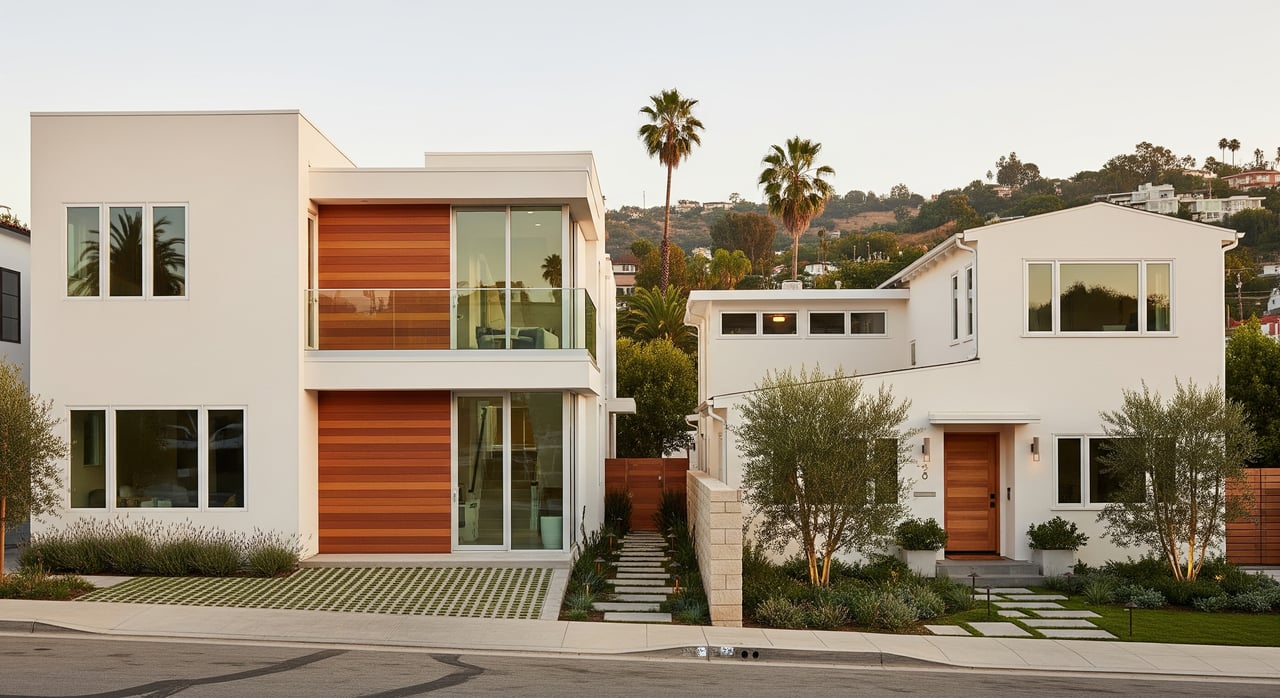
Thinking about splitting your West Hollywood lot to add more housing? SB 9 might be the path. It creates a streamlined way to split certain single-family parcels and build additional units without lengthy discretionary approvals. If you own or are eyeing property in Central LA or West Hollywood, understanding where SB 9 helps, and where it doesn’t, is the key to making a smart move. In this guide, you’ll learn how SB 9 works, how West Hollywood’s local rules shape feasibility, and the practical steps to evaluate your parcel. Let’s dive in.
SB 9 at a glance
SB 9 is a California law that allows two things on eligible single-family parcels: a ministerial lot split and up to two units per new lot. In total, that can mean up to four units across the original parcel, if you meet the objective standards. Ministerial review means approvals are based on clear, nondiscretionary rules and are typically faster than discretionary processes. You’ll still need building permits and utility sign-offs, which affect timing.
Key state-level guardrails include exclusions for designated historic resources and historic districts, prior SB 9 splits, and certain safety or environmental constraints. Cities can apply objective standards, such as setbacks, height limits, lot coverage, and design rules that are not subjective. The statute generally does not require permanent owner-occupancy, though private covenants or mortgages can still limit what you can do.
West Hollywood realities
West Hollywood is small, dense, and largely built out. Much of the city is zoned multifamily or commercial, so the number of true single-family parcels is limited. That reduces the universe of properties where SB 9 applies in the first place.
Historic context matters. West Hollywood has numerous locally designated historic resources and districts. If your parcel is a designated resource or within a historic district, SB 9 lot splits are typically off the table. Always verify with local historic preservation resources before you spend on design.
Lot size and shape are common hurdles. Many West Hollywood parcels are small or irregular, and local subdivision standards set minimums for lot area and width. Even if the zoning is single family, the geometry may make a compliant split impractical.
Overlay zones and objective design standards can further shape massing and site planning. Hillside and geotechnical conditions can add soft costs and time, even under a ministerial process. Private factors like CC&Rs, HOA rules, and lender consent can also restrict a split or new units.
Quick feasibility screen
Before you order surveys or architectural plans, use a simple two-stage screen to decide if the site warrants deeper work.
Step A: Preliminary checks
- Zoning: Is the parcel truly zoned for single-family use? If not, SB 9 likely does not apply.
- Historic status: Is the property a designated historic resource or within a historic district?
- Prior splits: Has the parcel already been split under SB 9? A second SB 9 split is generally not allowed.
- Size and shape: Would each new lot meet local minimum lot area and width standards?
- Encumbrances: Any HOA rules, CC&Rs, active code violations, or lender restrictions?
- Site constraints: Slope, easements, protected trees, or unusual utility locations that complicate access and buildable area.
If the parcel clears these quick tests, continue to deeper diligence.
Step B: Objective standards and infrastructure
- Standards review: Setbacks, height limits, lot coverage, FAR, open space, and any parking requirements for your location.
- ADU interplay: If you are weighing ADUs versus SB 9 units, confirm how the city treats the combination and maximum unit counts.
- Utilities: Sewer lateral capacity, water meter size, and electrical service. In dense infill, offsite upgrades are common and can add cost.
- Access and parking: Confirm driveway access, curb cuts, and feasible on-site layouts that meet objective rules.
- Permitting and construction: Anticipate staging and shoring needs on tight lots and plan for inspections and sequencing.
- Taxes and financing: Splitting lots typically triggers reassessment. Construction and take-out financing for small multi-unit projects can be more complex.
Step C: Typical process
- Pre-application check with the City of West Hollywood Planning Division to confirm eligibility and which objective standards govern your site.
- Submit your SB 9 lot split application with required declarations and supporting materials per the city’s checklist.
- Undergo ministerial review focused on objective compliance.
- If approved, record the parcel map, pay fees, and coordinate with the County for assessor updates.
- Prepare architectural and engineering plans, then submit for building permits and utility approvals.
- Build, inspect, and close out. Record new deeds and obtain certificates of occupancy.
Timing varies by scope. Ministerial entitlements are typically faster than discretionary reviews, but permits, utility coordination, and construction still take months.
Design and unit strategy in WeHo
Product-market fit matters in West Hollywood. Buyers and renters respond to smart layouts, quality finishes, and outdoor space. Small luxury formats or well-designed duplexes can perform well, but the site plan must respect setbacks, height, and coverage.
Parking is an expectations issue as much as a code issue. Even where rules allow lower parking counts because of transit, units without parking can be harder to sell. Explore compact or tandem solutions if feasible.
Consider how you plan to exit. If you intend to sell units separately, confirm legal pathways for condominiumization. If your plan is to hold and rent, underwrite market rents conservatively and budget for operating reserves.
Financial and resale considerations
West Hollywood is a high-demand Central LA market where land value drives outcomes. Adding compliant units can increase gross value, but infill construction costs and soft costs are significant and can compress margins. Underwrite hard and soft costs, including utility fees and professional reports, before you commit.
Financing can be specialized. Construction and permanent loans for newly split small lots or duplexes may have stricter terms and documentation. Expect some lenders and buyers to be cautious with newly created parcels, which can lengthen marketing timelines.
Marketability hinges on execution. Design-forward finishes, thoughtful outdoor space, and practical parking solutions help offset the uniqueness of small-lot product. Clear documentation of compliance and quality construction can support buyer confidence at resale.
Common pitfalls to avoid
- Assuming SB 9 applies because it is a state law without checking local zoning and historic status.
- Overlooking HOA or CC&R restrictions that override your plans.
- Underestimating utility capacity, offsite work, or staging constraints on tight urban sites.
- Ignoring reassessment and tax impacts when modeling returns.
- Over-projecting end values without accounting for buyer preferences around parking and outdoor space.
Your next steps
- Confirm zoning, historic status, and prior subdivision history for your parcel.
- Run a site-fit study against objective standards to test massing and access.
- Speak with utilities early to understand capacity and connection costs.
- Build a conservative pro forma that includes soft costs and timeline contingencies.
- Map your exit strategy: hold-and-rent vs. sell, and the legal pathway for either.
If you want a discreet, finance-first review of a specific parcel in West Hollywood or Central LA, schedule a private consultation with Hannah Laird. You’ll get a clear, objective path from screening through permitting and exit.
FAQs
What does SB 9 allow on a single-family parcel?
- SB 9 enables a ministerial lot split of one qualifying single-family parcel into two lots and allows up to two residential units per new lot, subject to objective standards.
Is SB 9 widely applicable in West Hollywood?
- Not broadly. West Hollywood has fewer single-family parcels and many historic resources and districts, which limits the number of eligible sites.
Can I use SB 9 if my property is in a historic district?
- Typically no. Parcels designated as historic resources or located within historic districts are generally excluded from SB 9 lot splits.
How fast is the SB 9 approval process in West Hollywood?
- Ministerial approvals are usually faster than discretionary reviews, but you should still expect a multi-month timeline for permits, utilities, and construction.
Do I need to live on-site after an SB 9 split?
- The state statute does not require permanent owner-occupancy, though private covenants or mortgage terms may impose additional limits.
How do parking requirements affect feasibility and resale?
- Objective parking standards still apply, and even if fewer spaces are allowed, lack of parking can impact marketability. Plan layouts that balance compliance and buyer expectations.
Will a lot split trigger higher property taxes?
- Newly created lots are typically reassessed. Consult the county assessor and include reassessment impacts in your financial model.