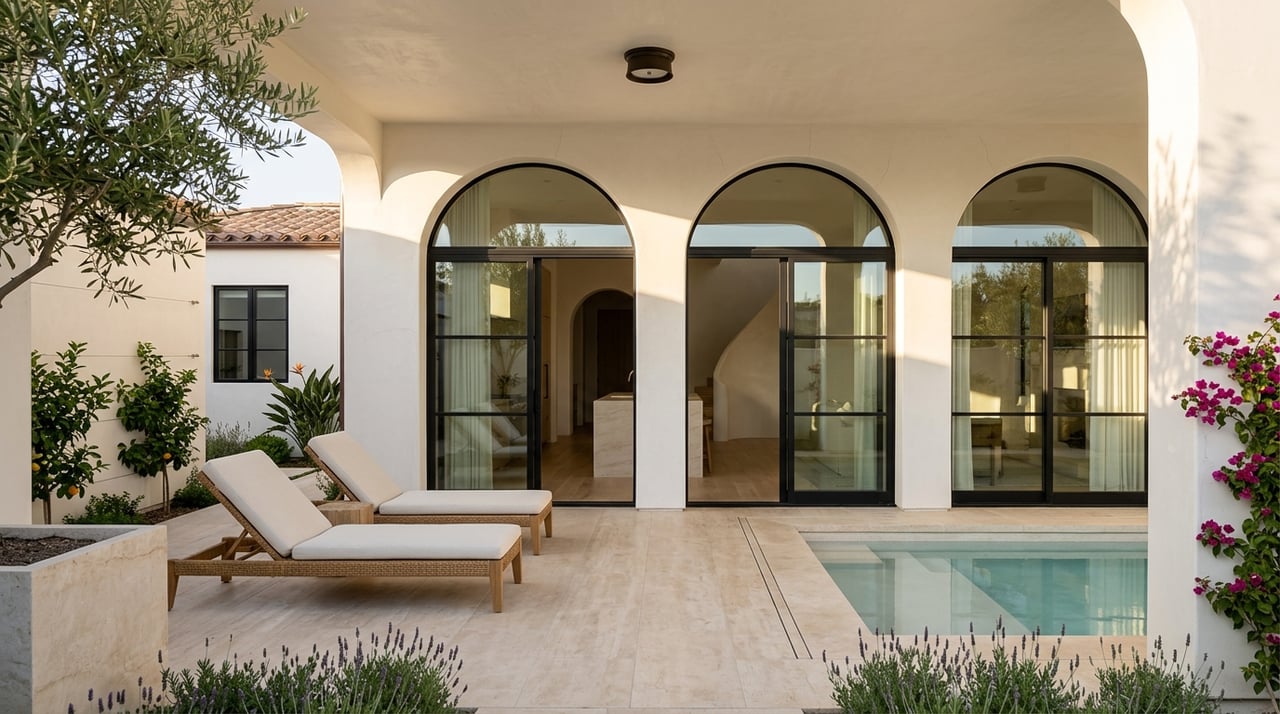
If you own a home or investment property in Brentwood, it is easy to assume any renovation will pay off. In reality, this is still a high-value market, but buyers remain selective and pricing discipline matters. The right value-add strategy can improve daily livability, support stronger resale, and reduce costly missteps. Let’s look at where upgrades tend to make the most sense in Brentwood.
Brentwood value-add starts with discipline
Brentwood remains one of Los Angeles’ highest-value neighborhoods. Zillow estimated the average Brentwood home value at $2,856,036 as of May 31, 2026, while Redfin reported a $2,249,243 median sale price in May 2026, along with 70 median days on market and a 97.2% sale-to-list ratio.
Those numbers matter because they point to a market where buyers still have standards. Homes can command strong prices, but not every renovation dollar automatically translates into added value. In this setting, the best projects are usually the ones that solve a real problem, broaden buyer appeal, and align with nearby comparable sales.
Focus first on layout and function
Floor plans often matter more than finishes
If your home feels awkward, choppy, or dated in how it lives, a floor-plan rework may create more value than a cosmetic refresh alone. The 2025 Remodeling Impact Report found that 46% of buyers are less willing to compromise on a home’s condition, and 28% of owners said the most important result of remodeling was better functionality and livability.
That is especially relevant in Brentwood, where many buyers expect homes to feel polished and intuitive from the moment they walk in. A better kitchen layout, improved circulation, more usable family spaces, or a stronger primary suite can change how the property competes.
Livability can support resale
The same report gave a Joy Score of 10 to both a kitchen upgrade and an added primary bedroom suite. That does not guarantee a specific resale return, but it does reinforce a practical point: when a renovation improves how a home functions, it often supports both owner satisfaction and marketability.
Before you commit to premium finishes, ask a more important question. Does the current plan work for how buyers want to live today? In many Brentwood homes, fixing that issue is the highest-leverage first move.
Prioritize upgrades with stronger resale signals
Los Angeles data favors visible, useful improvements
For owners weighing where to spend, the 2025 Cost vs. Value report for Los Angeles offers a helpful benchmark. Among the strongest performers were:
- Steel entry door replacement: 214.6% cost recouped
- Fiber-cement siding: 128.1%
- Minor kitchen remodel: 126.9%
- Vinyl window replacement: 83.2%
- Wood deck addition: 99.6%
These are metro-wide figures rather than Brentwood-only numbers, but the pattern is clear. Projects that improve first impressions, everyday use, and broad buyer appeal tend to outperform highly personalized spending.
Be careful with over-improving
The same Los Angeles benchmark showed weaker recoup rates for some common projects:
- Midrange bath remodel: 89.6%
- Upscale bath remodel: 81.1%
- Backyard patio: 47.2%
This does not mean those projects are never worth doing. It means you should be selective. If your property already presents well, a very expensive upgrade package may not produce the premium you expect if it pushes the home beyond what Brentwood buyers will pay based on comparable listings and sales.
Indoor-outdoor upgrades should stay efficient
Better flow can beat bigger spending
Indoor-outdoor living is important in Los Angeles, but the numbers suggest restraint often wins. In the same Cost vs. Value data, a wood deck addition came close to breakeven at resale, while a backyard patio recouped far less.
For Brentwood owners, that points to a useful strategy. Improving doors, transitions, circulation, and usable outdoor connections may be more defensible than building an oversized, resort-style yard package. In other words, clean execution and practical flow can matter more than extravagance.
Match the lot and the house
Brentwood includes many single-family properties on parcels where site conditions shape what makes sense. On some homes, a modest deck or a better connection from the kitchen or family room to the yard may feel natural and value-enhancing. On others, large hardscape plans may add cost without improving the property in a way buyers will reward.
Understand Brentwood planning before you expand
Parcel-level review is essential
One of the biggest mistakes owners make is assuming that if an addition or expansion works nearby, it will work on their lot too. The Brentwood-Pacific Palisades Community Plan and related city planning materials show that the area includes multiple overlays and specific plans, including the dual coastal plan zone, Mulholland Scenic Parkway, San Vicente Scenic Corridor, and the West Los Angeles Transportation Improvement and Mitigation Specific Plan.
The city also states that the adopted maps are official City Council documents governing land use and development rules. That means expansion concepts should be verified at the parcel level before you underwrite them as part of your value-add strategy.
Brentwood often rewards site-sensitive design
The residential character of the planning area is largely low-density and very-low-density single-family housing. The community plan states that 60% of housing units are single-family, located on 88% of residential land area, with an average net density of five units per acre.
The plan also emphasizes architectural compatibility, preservation of residential character, and sensitivity to hillside conditions. For many Brentwood properties, that suggests thoughtful renovations and well-integrated additions are often better aligned with the area than density-driven redevelopment.
ADUs can add value, but only when the parcel works
ADUs remain a major expansion option
In Los Angeles, ADUs continue to be one of the clearest ways to add utility and potential income flexibility to a residential property. LADBS states that ADUs, JADUs, and movable tiny houses can be built in any area that allows residential use.
LADBS also notes that parking is not required for new ADUs within a half-mile walk of public transit, and if covered parking is removed for an ADU, it does not need to be replaced. In addition, approved standard plans may help shorten plan check and permit issuance.
Brentwood feasibility is lot-specific
Even with favorable city rules, Brentwood is not a one-size-fits-all ADU market. The community plan’s emphasis on low-density preservation and hillside sensitivity means constraints can become the deciding factor.
LADBS states that grading permits are required for grading work in hillside areas, including basement excavations, retaining-wall cuts, backcuts, and backfill. If your lot involves slope, access, retaining conditions, or overlay restrictions, those issues can materially change both timing and cost.
Rental rules can affect ADU economics
Income strategy needs a second layer of review
If you are evaluating an ADU for rental income, the physical feasibility is only part of the picture. LAHD states that the Rent Stabilization Ordinance, or RSO, may apply to ADU or JADU parcels depending on the age and configuration of the existing structure.
LAHD also notes that detached ADUs on pre-1978 single-family parcels are generally not subject to the RSO, while other configurations can be. That difference can significantly affect how you model future income and flexibility.
Compliance details matter
LAHD further states that home-sharing is not allowed in units subject to the RSO, annual registration fees may apply, and removing a parking space from a tenant can require a corresponding rent reduction. For investors and owner-occupants alike, these details can change the economics enough to affect whether an ADU is truly the right move.
This is why expansion decisions in Brentwood should be treated as underwriting exercises, not just design ideas. The concept may sound strong in theory, but the parcel, approval path, and rental framework determine whether it performs in practice.
Renovate, expand, or hold?
A practical Brentwood hierarchy
In today’s Brentwood market, a sensible order of operations is often:
- Fix layout and functionality first
- Upgrade visible, broadly appealing features second
- Consider an ADU or modest expansion if the parcel supports it efficiently
- Hold off if the required work pushes pricing beyond realistic comps
This approach fits the market data, planning context, and local regulatory framework. It also helps you avoid tying up capital in improvements that may look impressive but do not move the property forward in a measurable way.
Think like a buyer and an investor
NAR also found that 64% of owners had a greater desire to be in their home after remodeling, 46% would do the project the same way again, and 92% would remodel more areas if cost were not an issue. That reinforces something important for Brentwood owners: quality of life and resale value can overlap, but cost still matters.
The strongest value-add strategies usually create clear utility, present well to a broad luxury buyer pool, and stay grounded in what the market is already supporting. In Brentwood, that often means measured upgrades, careful planning, and a parcel-specific review before committing to major expansion.
If you are weighing a renovation, repositioning an investment property, or deciding whether to expand, a disciplined review can help you protect upside and avoid unnecessary risk. To discuss a Brentwood property with a finance-first, design-aware perspective, Hannah Laird can help you evaluate the numbers, the planning realities, and the best path forward.
FAQs
What value-add projects tend to perform best for Brentwood homes?
- In general, projects with strong resale signals include layout improvements, minor kitchen remodels, entry upgrades, select exterior updates, and practical indoor-outdoor enhancements that improve how the home lives.
When is a floor-plan rework better than adding square footage in Brentwood?
- A floor-plan rework may be the better choice when the current layout feels inefficient, fragmented, or outdated, and when better flow could improve buyer appeal without the cost and approval burden of an addition.
Are ADUs allowed on Brentwood residential properties?
- LADBS states that ADUs, JADUs, and movable tiny houses can be built in areas that allow residential use, but Brentwood parcel conditions, hillside issues, and planning overlays can affect feasibility.
What Brentwood property issues can complicate an addition or ADU?
- Parcel-specific constraints such as hillside grading, overlay zones, access limitations, and other planning rules can affect whether an expansion concept is practical or efficient.
Which upgrades may look impressive but recoup less at resale in Los Angeles?
- Based on the 2025 Los Angeles Cost vs. Value benchmarks, upscale bath remodels and large patio-style backyard projects may recoup less than more targeted, market-facing improvements.